Rotator cuff tendonitis (tendinopathy) is a degenerative condition which impacts one or more rotator cuff tendons located in the shoulder. The patient may  experience shoulder pain while resting and this can get worse if they lift or move their arm above the shoulder.
The impacted tendon usually feels tender. Treatment can help alleviate these immediate, painful symptoms. There are certain exercises that the patient can perform after the pain has resolved to prevent a recurrence of the injury.
Thomas & Bigler Knee & Shoulder Institute, led by board certified orthopedic surgeons Dr. Steven C. Thomas and Dr. Gregory T. Bigler, provides orthopedic surgery to patients in Las Vegas, Nevada and surrounding locations.
Symptoms
Rotator cuff tendonitis is the most common reason behind shoulder pain which manifests slowly over time or after a rotator cuff injury that has not healed adequately.
The symptoms of this condition are as follows:
- Pain when the shoulder is at rest, during specific motions or at night.
- Experiencing pain especially with overhead motions such as during swimming or racket sports.
- Pain felt less commonly with arm movements below the shoulder level.
- Tenderness when the impacted area is pressed which may feel thicker as well.
- A creaking sensation known as crepitus felt when there is movement in the shoulder.
Causes
Overtraining
A common cause of this condition is overuse due to work or exercise. The most common reasons for rotator cuff tendonitis are repetitive overhead motions such as during swimming, throwing, or playing tennis. Many people make the mistake of training too hard within a short span. It is important to avoid this mistake and pay attention to the initial warning signs.
Work-related
A person working at a desk for extended periods and overusing a keyboard or mouse can develop rotator cuff tendonitis, especially if they have poor posture. The seemingly subtle shoulder movements which occur when operating a mouse can lead to rotator cuff tendonitis over a period.
Treatments
The treatment for this condition comprises two parts. The primary goal is to address the symptoms including a reduction in the pain and swelling to enable proper movement. The secondary objective is to identify the underlying causes and treat them.
Exercises
Exercises are vital after the swelling and pain have reduced. The shoulder’s normal function must be restored. It is important to release the tension in taut muscles while strengthening the weak ones, which the patient can achieve with certain exercises.
In general, the external rotator cuff muscles or those muscles that rotate the shoulder joint outwards are weak in comparison to the ones which rotate the shoulder joint inwards.
Medications
A physician may prescribe anti-inflammatory drugs such as ibuprofen to treat the patient in the initial stages but usually not in the long-run. The patient should not take ibuprofen if they have asthma. Furthermore, the physician will always check for contraindications prior to prescribing medicines.
Electrotherapy
The patient may find treatments such as interferential stimulation, ultrasound, laser or magnetic field therapy beneficial in decreasing pain and swelling.
Board certified orthopedic surgeons Dr. Thomas and Dr. Bigler receive patients from Las Vegas, Nevada and nearby areas for orthopedic surgery.
If you would like to schedule an appointment or learn more about the Knee and Shoulder Institute procedures & treatments performed by Las Vegas, Nevada board-certified surgeons Steven C. Thomas, MD and Gregory T. Bigler, MD. Contact the office today click here.
 worsen over a period and subsequently resolve between one to three years.
 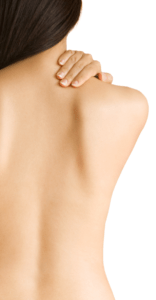 have been causing them slight discomfort while they continue to train.
 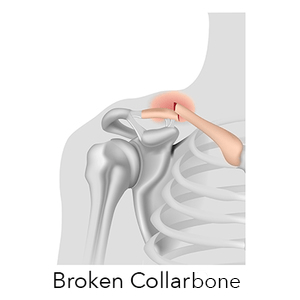 the middle of the chest.
  shoulder. It typically occurs due to a fall on an extended arm.
 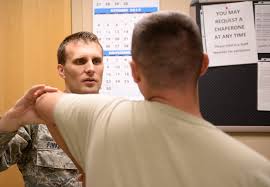 A dislocated shoulder is a traumatic and painful injury, typically caused due to a fall or during contact sports. In a dislocated shoulder condition, the upper arm bone will move away from its normal position along with damage to the surrounding muscles, tendons and ligaments.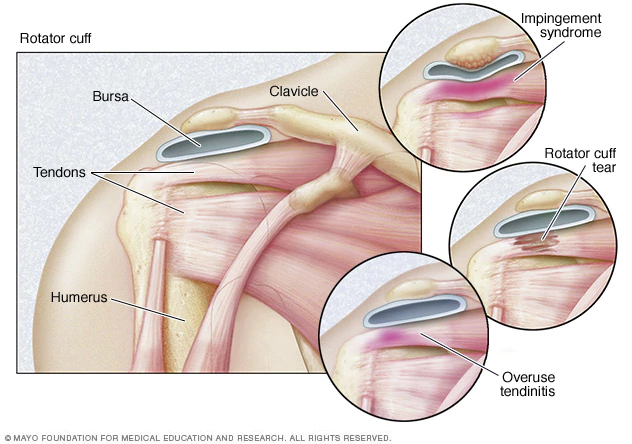
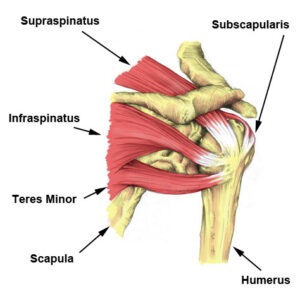 A tear to any of the four rotator cuff muscles in the shoulder is called a rotator cuff strain or tear. The injury is common in throwing and racket sports, and may range from mild to severe. The job of the rotator cuff is to rotate the arm at the shoulder and provider support around the joint.
 An acute shoulder injury may occur due to sudden direct impact on the shoulder joint, overuse or overstretching of the shoulder muscle, tendon or ligament, or twisting of the shoulder joint.
  The deltoid muscle is a significant muscle on the shoulder, and it has three parts: the anterior, posterior and the middle. This muscle enables the arm to lift sideways.
  A clavicle fracture or broken collarbone, also known as a fracture of the clavicle bone, runs along the front of the shoulder to the breastbone or sternum in the middle of the chest.